Most Google searches are about learning, not buying. That’s the core of informational intent SEO. Users want answers, explanations, or guidance - not products. To succeed, you need to create content that ranks well and genuinely helps users. This guide covers:
- What is informational intent? Searches focused on knowledge, not transactions.
- Why it matters? Drives traffic, builds trust, and supports long-term growth.
- How to target it? Use the right keywords, formats, and optimization techniques.
Informational content isn’t just about traffic - it’s about connecting with users at the right stage of their journey. Let’s dive into the strategies to make it work.
How to Write Informational Content for an Affiliate Site [4.3]
How to Find Informational Keywords
To identify informational keywords, focus on how people phrase questions when they're looking to learn rather than buy. Target terms that not only match this intent but also offer good potential for ranking.
Start by recognizing common patterns in search queries. Once you know what to look for, you can use keyword research tools to find opportunities that align with your content goals.
Common Informational Query Patterns
Informational keywords often follow predictable patterns, making them easier to identify. Look for terms with modifiers like "how to", "what is", "why", "guide to," or phrases such as "steps to", "ways to", "explained", "tutorial", "tips for," and "examples of." These phrases clearly indicate a learning intent. For example:
- "How does SEO work?"
- "What are the benefits of meditation?"
- "History of artificial intelligence."
These types of searches show that users are seeking knowledge, not products. If a keyword includes these modifiers, it’s likely geared toward informational content.
Understanding this distinction helps you create the right type of content. Long-form guides, tutorials, and how-to blogs are perfect for informational queries. On the other hand, product pages suit transactional searches, while navigational searches align better with branded landing pages.
Keyword Research Tools
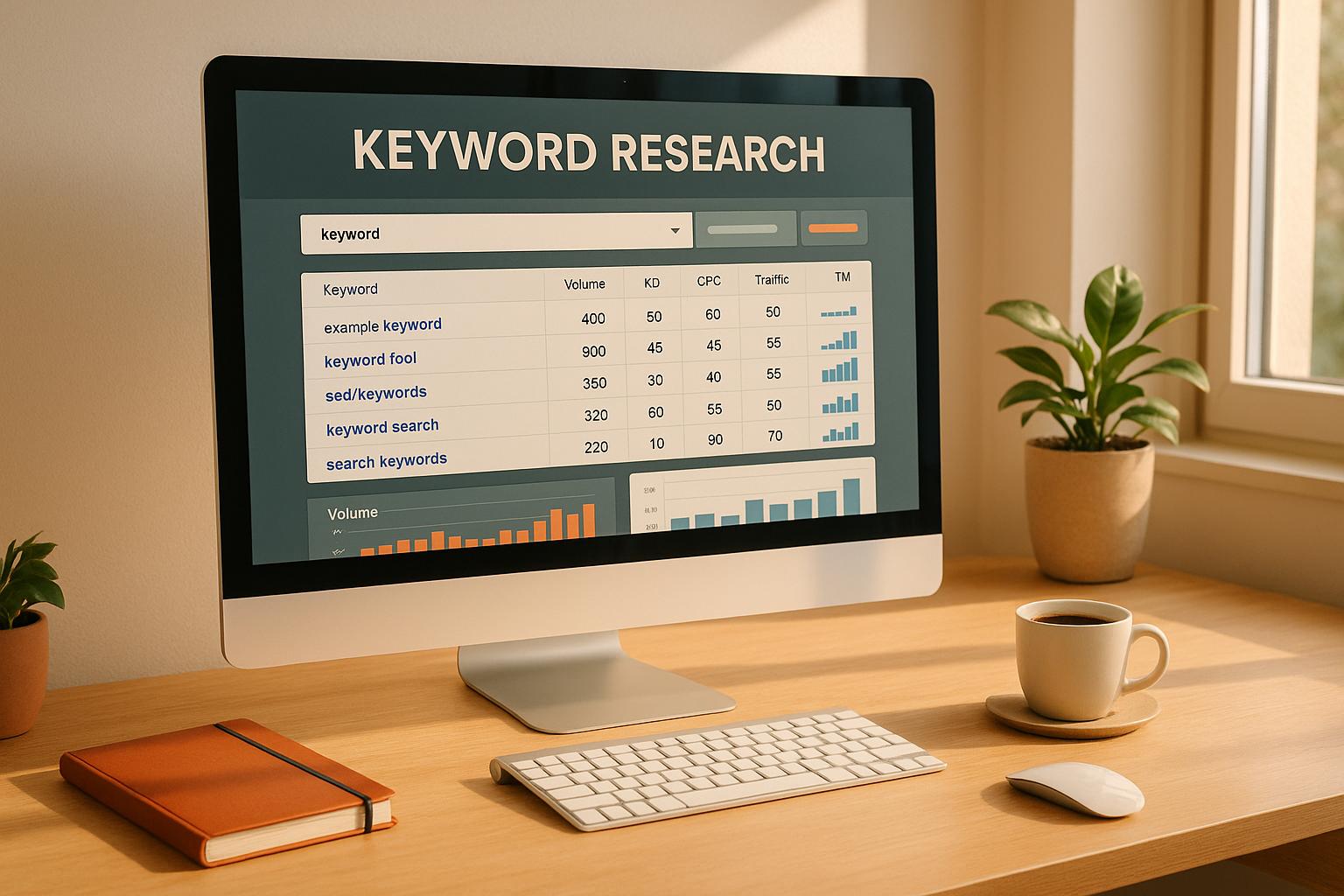
Once you’ve identified the patterns of informational queries, the next step is to use keyword research tools to find specific opportunities. Start by entering a broad topic into a tool like Google Keyword Planner. For example, if your focus is SEO, you might start with "link building." Then, filter for question-based keywords, as these are strong indicators of informational intent. Look for keywords that balance high search volume with low competition, as these give you a better chance to rank while still reaching a sizable audience.
Google Keyword Planner is a reliable starting point, offering search volume data and related terms. For instance, if you’re researching "link building", you might uncover queries like:
- "What is link building in SEO?"
- "How to do link building for beginners?"
- "Why is link building important?"
Beyond Google Keyword Planner, other tools can streamline your search for informational keywords. AI-driven platforms like Keyword Insights and Keyword Cupid excel at clustering keywords by intent using SERP analysis. Tools like AnswerThePublic and AlsoAsked focus on extracting specific questions, often flagged by phrases like "how to" or "what is." Additionally, semantic analysis tools such as TextOptimizer suggest related terms and questions, helping you capture a broader range of informational queries.
Long-tail keywords are especially valuable for informational content. These are specific, lower-competition terms that target clear intent. For example, instead of the broad term "SEO", you might aim for "how to do link building for beginners" or "what is link building in SEO?" These keywords not only face less competition but also attract users with more precise needs.
When evaluating keywords, aim for a balance between search volume and competition. High-volume keywords often come with intense competition, so it’s smart to target those with moderate volume and lower competition. These indicate genuine interest while offering a better chance to rank.
After pinpointing a primary informational keyword, expand your content by exploring related variations and similar queries. For instance, if your main keyword is "what is link building in SEO?", you could also target variations like:
- "Link building for beginners"
- "Link building strategies"
- "Link building best practices"
- "Why is link building important?"
This approach allows you to create a content cluster. A central guide can address the primary keyword, while additional posts or sections cover the variations, offering more comprehensive coverage.
Ultimately, informational keyword research is about understanding user intent, not just chasing high search volumes. Recognize common patterns, use the right tools, and focus on creating content that answers your audience’s questions directly and effectively.
Creating Content for Informational Queries
Once you’ve identified the right informational keywords, the next step is to create content that directly answers user questions in a way that's easy to understand and engaging. People searching for information often want quick facts, detailed explanations, or comparisons. Your content should cater to these needs while remaining clear and trustworthy.
Selecting the Right Content Format
The format of your content should match the intent behind the search query. For example, a query like "how to brew espresso" might be best served with a detailed, step-by-step guide, while "what is quantum computing" could benefit from a thorough blog post that explains the concept and compares it to related technologies.
Long-form guides are great for tackling broad, in-depth topics because they allow for detailed exploration and gradual learning. If you're presenting complex ideas, infographics or visuals can make the information easier to grasp. On the other hand, videos work well for demonstrating processes or simplifying abstract concepts.
To choose the best format, use keyword research tools to analyze the search intent. For instance, a query like "how to prune roses" suggests an instructional intent, making a video tutorial or a step-by-step guide an ideal choice.
For users looking to quickly "Acquire" facts, provide concise answers with minimal steps. Meanwhile, those with an "Understand" intent prefer detailed, well-organized content that consolidates information from multiple sources on a single page.
Structuring Content for Easy Reading
How you organize your content can make or break its ability to hold a reader's attention. Start with a clear headline that includes your target keyword and tells readers exactly what to expect. Use subheadings (H2 and H3 tags) to divide your content into logical sections, allowing readers to easily scan and find the information they need.
Keep paragraphs short - two to four sentences is ideal - and kick things off with a brief introduction that answers the main question right away. Then, expand with additional details. Research shows that users searching for quick facts or looking to understand a topic often prefer direct answers upfront.
For fact-based queries, provide the answer as early as possible, using plain language and minimizing extra steps. For more exploratory topics, present all relevant information on a single page so users can dive deeper as they learn.
Use bullet points or numbered lists sparingly to highlight key points or steps, but don’t overdo it, as too many lists can disrupt the flow. Incorporate visuals like images, diagrams, or infographics with descriptive alt text to enhance understanding and break up large blocks of text. Creating original visuals, such as diagrams or flowcharts, can also improve comprehension and help your content stand out.
A clear structure with labeled sections and a logical flow not only improves readability but also makes your content more likely to be featured in search engine snippets.
Optimizing for Featured Snippets
Featured snippets can give your content prime visibility by appearing above regular search results. To target these, identify keywords that already generate featured snippets. Common snippet types include paragraph snippets (short answers of 40–60 words), list snippets, and table snippets for comparisons.
For paragraph snippets, provide a concise, self-contained answer within the first 100 words of your content. For list snippets, use clear bullet points or numbered lists to outline key steps or benefits, such as the steps to meditate or the advantages of a specific product. For comparison queries, tables work well to highlight differences or features side by side.
Using structured data markup (like schema.org) helps search engines understand your content better, increasing the chances of appearing in rich results. Place your snippet-optimized content near the top of the page, ideally within the first 200 words, and include the exact query as a heading followed by a focused answer.
Keep an eye on your featured snippet rankings and refine your content if competitors start outperforming you. The goal is to strike a balance between being concise and offering enough depth. Begin with a direct answer, then expand with examples, supporting data, and additional context. Use bold text for key terms and bullet points for important takeaways to enhance readability.
Support your content with relevant data or statistics, and address varying levels of user knowledge. Whether someone is new to the topic or looking for advanced strategies, your content should remain helpful. For example, when discussing link-building strategies, you might highlight approaches like guest blogging on industry sites or publishing original research to demonstrate practical applications.
On-Page SEO for Informational Content
Optimizing informational content for search engines requires attention to every detail on the page. Each element should signal relevance to search engines while keeping the reader's experience at the forefront. By implementing effective on-page SEO techniques, you can help search engines understand your content's purpose and ensure it reaches the right audience. These strategies build on your keyword research and content creation, aligning every part of your page with both SEO goals and user engagement.
Keyword Placement and Meta Tags
After crafting your content, it's time to fine-tune the technical elements to highlight relevance and authority. Where and how you place keywords can significantly impact SEO performance. Make sure your primary keyword appears early in the title (within the first 60 characters), the meta description (within the first 120 characters), and the opening paragraph. Use natural variations of the keyword, such as "brewing espresso" or "espresso methods", to maintain readability without overloading the text with repetitive phrases.
Your meta description should clearly outline what users will gain from your content. Think of it as a mini pitch. For example, if someone searches for "how to brew espresso", your meta description might say: "Learn how to brew espresso at home with this step-by-step guide covering equipment, techniques, and troubleshooting tips." This sets clear expectations and uses action-oriented words like "Learn" or "Discover" to highlight the value of your content.
For headers, use your H1 tag for the main topic featuring your primary keyword, and organize related informational keywords across H2 and H3 subheaders. This structure not only helps readers navigate your content but also signals to search engines how your page is organized.
Throughout the content, incorporate natural keyword variations. For instance, if you're targeting "link building", include related terms like "building backlinks", "link acquisition", or "link development." Additionally, mention semantic keywords that might come up in user searches. For a topic like espresso, this could include terms like "coffee extraction", "crema", or "grind size." This comprehensive approach demonstrates that your content covers the topic thoroughly.
When writing meta descriptions, aim for 150-160 characters and address the user's query directly. If your content is a how-to guide, mention the number of steps or the time required (e.g., "5-minute guide" or "7-step process"). For definitions or explanations, give a preview of the key insight readers will gain. Avoid misleading descriptions that don't reflect your content, as this can increase bounce rates and hurt your rankings.
Improving Content Quality and Authority
To rank well, your content must demonstrate authority and reliability. Search engines prioritize pages that align with E-E-A-T: Experience, Expertise, Authoritativeness, and Trustworthiness. Cite reputable sources such as academic papers, government websites, or industry leaders to back up your claims.
Showcase the author's qualifications prominently. Include details like certifications, relevant experience, or years of expertise in the topic area. This is especially important for sensitive subjects like medical, financial, or legal information, where credibility plays a critical role. Adding an "About the Author" section can further establish trust by explaining why the author is qualified to write on the topic.
Keep your content up to date. Outdated information can harm your credibility and rankings. Make it a habit to review your content every six months to refresh statistics, examples, and recommendations with the latest information.
When presenting information, use straightforward, easy-to-understand language. Readers searching for information want clear answers tailored to their queries. Avoid unnecessary jargon unless it's essential for your audience, and when you do use technical terms, provide simple explanations.
Using Visual Elements
Visual elements like images, videos, and infographics not only enhance the user experience but also contribute to better SEO. They break up large blocks of text, making your content easier to read and more engaging.
Include high-quality, relevant images throughout your content, aiming for one every 300-400 words. This keeps readers engaged and provides visual breaks that reduce mental fatigue. Since users often scan pages in an F-pattern, placing visuals strategically near headlines or key points helps maintain their attention.
Custom infographics can simplify complex ideas or processes, while videos can demonstrate steps or explain concepts in detail. These elements increase the time users spend on your page, signaling to search engines that your content is valuable. Flowcharts and diagrams are particularly useful for step-by-step guides or decision-making processes, helping readers grasp concepts quickly.
Optimize all visuals with descriptive alt text that includes relevant keywords. For example, instead of generic filenames like "image1.jpg", use descriptive text like "espresso machine brewing coffee with crema." This improves accessibility for users with screen readers and provides search engines with additional context about your images.
Compress images to ensure fast loading times - users expect pages to load in under two seconds. Slow-loading visuals can increase bounce rates and negatively affect SEO. Use modern formats like WebP and responsive images that adapt to different screen sizes, especially since most users browse on mobile devices.
Add captions below images to provide context and create additional opportunities for keyword placement. Captions are often read more than the main text, so use them to reinforce important points or offer supplementary information.
Consistency in branding and design across visuals helps establish professionalism and trust. Stick to a cohesive color scheme, font style, and design elements that align with your brand identity. This not only makes your content visually appealing but also helps it stand out in users' minds.
Finally, ensure every visual element serves a purpose. Whether it's clarifying a concept, demonstrating a process, or presenting data, each image or video should add value to the content. Avoid using decorative visuals that don't contribute to understanding, as they can slow down your page without offering any real benefits.
sbb-itb-5be333f
Measuring Informational Content Performance
Evaluating the performance of your informational content is crucial for understanding its impact on your SEO efforts. Unlike transactional content, where conversions are the main goal, success in informational content is measured by engagement, visibility, and building authority. The metrics you monitor should reflect how well your content addresses user questions and establishes your site as a reliable resource. These insights not only confirm your content's performance but also help refine your SEO strategy over time.
Different types of informational queries require tailored measurement approaches. For instance, users seeking quick facts have different expectations compared to those diving into complex topics. Studies show that users performing "Acquire" tasks, like looking for a quick fact, are less patient than those conducting "Compare/Choose" or "Understand" tasks. These users demand faster loading times and fewer clicks. This highlights the need to align your measurement strategy with the type of content you're producing.
Key Metrics to Track
To measure the success of your informational content, focus on key engagement metrics using analytics tools.
- Time on page: This metric reveals how long users stay on your content. High-performing pages often retain users for 2-3 minutes or more, with some exceeding 5 minutes. If your average time on page is under 1.5 minutes, it could indicate that your content lacks depth or is poorly structured.
- Bounce rate: This shows the percentage of visitors who leave without exploring further. For informational content, a bounce rate below 50% is ideal, with top-performing pages achieving 30-40% bounce rates. However, a high bounce rate isn't always negative - it might mean users found what they needed quickly - but combined with low time on page, it suggests the content isn't meeting expectations.
- Scroll depth: This metric tracks how far users scroll down the page. Successful pages typically see 60-80% average scroll depth. If users stop scrolling at 30-40%, it might indicate the content is too long, poorly organized, or not engaging enough. Identify drop-off points and adjust those sections to improve readability.
- Organic traffic volume: This measures how well your content ranks for informational queries. Ideally, informational keywords should drive 30-50% or more of your total organic traffic. Focus on both total traffic and its growth over time, as steady increases signal improved visibility and authority.
- Click-through rate (CTR): This shows how effectively your title and meta description attract clicks from search results. For position 1 in search results, the average CTR ranges from 2-4%. If your CTR is below this despite good rankings, revisit your title and meta description to better highlight the value of your content.
- Pages per session and return visitor rate: These metrics indicate whether users find your content valuable enough to explore more or return later. A high return visitor rate signals that your site is becoming a trusted source of information.
Tailor these metrics to the type of query you're addressing. For quick "Acquire" tasks, prioritize metrics like time to first meaningful interaction and immediate CTR. For in-depth "Understand" tasks, focus on metrics such as scroll depth and pages per session.
Monitoring Featured Snippet Rankings
Featured snippets are prime real estate in search results, appearing above traditional organic listings. Ranking in these snippets boosts visibility significantly, even above the top organic result.
Use Google Search Console to identify which of your pages appear in featured snippets. Filter the Performance report by "Rich results" to view impressions and clicks for snippet rankings. This data provides a baseline for understanding your snippet presence.
For more detailed tracking, tools like Semrush, Ahrefs, and Moz can help. These platforms monitor your featured snippet rankings across numerous keywords, alerting you to gains or losses. They also provide details like snippet type (paragraph, list, or table), current ranking position, and search volume for keywords triggering snippets. This information helps you refine your content to target snippet opportunities.
Set up a custom dashboard to track your top 50-100 informational keywords and monitor snippet trends. Regular audits - at least monthly - can highlight new opportunities and track competitor activity. Pay special attention to keywords where your page ranks in positions 2-5, as these are prime candidates for snippet optimization.
Study the types of content Google favors for snippets. For example, "How-to" queries often trigger numbered list snippets, while definition-based queries tend to show paragraph snippets. Adjust your content structure accordingly to improve your chances of earning a snippet.
If a competitor takes over your snippet, analyze their content to see what changed. They might have provided a clearer answer, included additional data, or structured their content more effectively.
Analytics Tools
To gain deeper insights into your informational content performance, leverage tools like Google Analytics and Google Search Console.
- Google Analytics: Use this tool to analyze user behavior on informational pages. Create custom segments to focus on traffic from informational keywords. Track metrics like session duration, bounce rate, and pages per session for these segments. You can also set up custom events to monitor actions like video plays, PDF downloads, or clicks on related links - these events reveal which elements drive engagement.
- Google Search Console: This tool helps monitor your average ranking position for informational queries. It also tracks impressions and clicks, identifying content that ranks well but has low CTR. Use this data to refine titles and meta descriptions. Additionally, Search Console reveals which queries drive traffic to specific pages, helping you assess whether you're ranking for the right keywords or attracting unintended traffic.
Establish baseline metrics by analyzing your current performance over a 3-6 month period. Document metrics like organic traffic, bounce rate, time on page, and ranking positions for your informational keywords. Compare these metrics against industry benchmarks while adjusting for your niche.
Set tiered goals to improve performance. For example:
- Short-term (1-3 months): Focus on optimizing content and improving on-page elements.
- Medium-term (3-6 months): Aim for ranking improvements and featured snippet gains.
- Long-term (6-12 months): Work on building authority and increasing organic traffic.
Competitive analysis can also guide your targets. Use tools like Semrush or Ahrefs to compare top-ranking content in your niche. Look at metrics like word count, backlinks, and estimated traffic to identify areas for improvement in your own content.
Finally, monitor whether users are finding information easily and comprehensively. Research shows users performing "Research" tasks often reformulate queries and use longer search phrases. If you notice high query reformulation rates, it might mean your content isn't fully addressing user needs. Track whether users find answers directly on your page or need to navigate multiple pages. Increasingly, users expect consolidated information in one place rather than scattered across several sources. Adjust your content to meet these expectations and improve user satisfaction.
Resources for Informational Intent SEO
Navigating the world of informational intent SEO can feel like a maze without the right tools. You've learned how to measure performance and refine your content, but choosing the best resources for keyword research, content optimization, and technical SEO can be daunting. With so many options out there, finding tools that align with your content goals - and your budget - takes time and effort.
To make this easier, marketers need tools that can quickly pinpoint question-based queries, refine content for featured snippets, and track engagement metrics. A resource that consolidates these tools in one place can save time and bridge the gap between strategy and execution.
Top SEO Marketing Directory
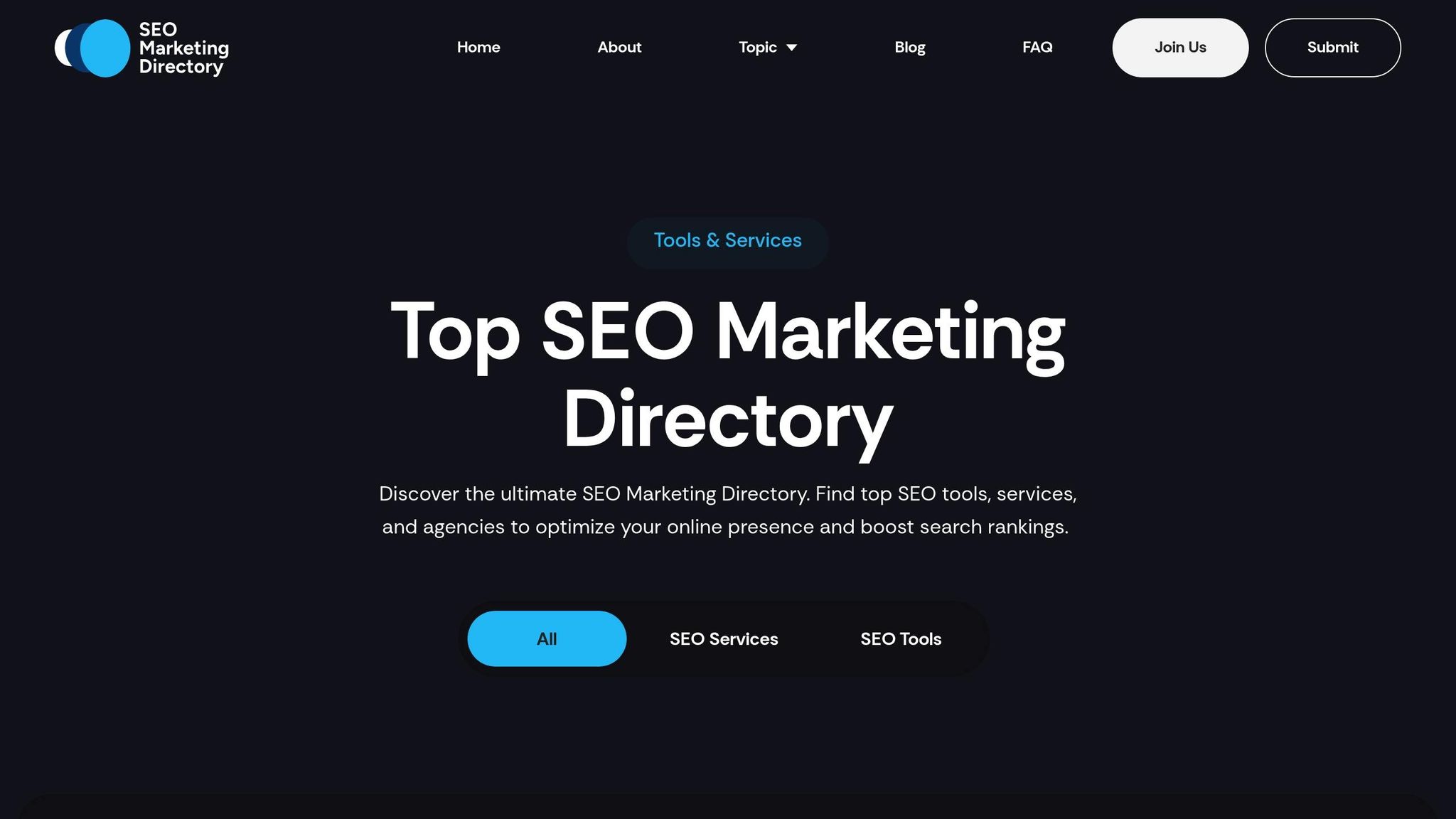
The Top SEO Marketing Directory (https://marketingseodirectory.com) is a one-stop platform designed to simplify the search for SEO tools and services. Instead of spending hours researching individual solutions, this directory lets businesses and marketers compare vetted SEO agencies, software providers, and specialized services in one place.
The directory provides tools for every aspect of informational intent SEO:
- Keyword Research: Discover tools that focus on question-based queries and long-tail keywords. These help differentiate between informational, navigational, transactional, and commercial intent keywords, ensuring your content aligns with user needs.
- Content Optimization: Access tools that analyze readability, suggest formatting improvements, and optimize for featured snippets. Since featured snippets often dominate informational search results, these tools are crucial for improving visibility.
- Technical SEO: Explore services that ensure your website's structure and indexing are optimized for search engines. Proper technical foundations make it easier for search engines to crawl and understand your informational content.
- Link Building and Authority: Build E-E-A-T (Experience, Expertise, Authoritativeness, and Trustworthiness) signals that Google uses to assess content quality. These services help establish domain authority and improve rankings for informational queries.
The directory also includes analytics and monitoring tools to track metrics like bounce rates, engagement, featured snippet rankings, and organic traffic. These tools align with the measurement techniques discussed earlier, helping you monitor ROI and showcase the value of your efforts.
What sets the Top SEO Marketing Directory apart is its emphasis on expert guidance and comparison. Instead of wading through countless options, you can evaluate providers with proven experience in creating long-form guides, how-to articles, and other informational formats. This focus ensures you're choosing agencies and tools that excel in informational intent strategies - not just general SEO.
The directory offers three pricing plans to fit different needs: Basic (free), Premium ($49/month), and Enterprise (custom pricing). Whether you're just starting out or managing a large-scale SEO strategy, there's an option for you.
Studies show that users searching for information behave differently depending on their intent. Those looking for quick facts prioritize speed and direct answers, while users aiming to understand a topic value well-organized, in-depth content from multiple perspectives. The tools and services in the Top SEO Marketing Directory are tailored to these patterns, ensuring your content resonates with users across various search journeys.
Conclusion
Informational intent SEO plays a crucial role in driving traffic, building authority, and positioning your brand as a trusted source of knowledge. It’s not just about rankings - it’s about creating content that resonates with users seeking answers, not products.
The main takeaway? Informational queries - those where users are looking for knowledge rather than making an immediate purchase - demand a different approach. By addressing these queries effectively, you can improve rankings, reduce bounce rates, and support long-term conversion goals.
Start by diving into keyword research to uncover the questions your audience is asking. Then, audit your existing content to find gaps or areas where more depth is needed. Focus on producing high-quality, well-structured articles with clear headings, subheadings, and visuals that make the information easy to scan and understand.
Authenticity is key. Your content should directly answer user questions rather than trying to force product-focused pages into informational search results. Search engines can identify mismatched content and won’t reward it. Similarly, avoid thin or surface-level content - your goal is to provide more depth, accuracy, and value than competing pages.
Informational content is an investment in trust and long-term relationships. While it might not lead to immediate sales, it plays a critical role in the customer journey. Users who find your content helpful are more likely to return, subscribe to your newsletter, and eventually make a purchase. This approach builds customer loyalty and increases lifetime value.
To measure success, set up a framework to track engagement metrics like keyword rankings, average time on page, scroll depth, and bounce rates. Keep an eye on featured snippet opportunities, as informational queries often lead to position zero placements. These insights will help you refine your strategy and ensure your content continues to deliver value.
Maintaining strong informational content requires ongoing effort. Regularly update your pages with fresh data, new insights, and relevant details to keep them accurate and engaging. Build topical authority by creating interconnected content on related subjects, which strengthens your domain authority and boosts rankings across similar queries. Align these efforts with your broader SEO strategy to stay competitive.
With the strategies and tools outlined here, you’re equipped to elevate your informational intent SEO efforts. The real question isn’t whether to invest in this type of content - it’s how quickly you can implement these tactics to capture the traffic, trust, and authority that come with it.
FAQs
How do I choose the right informational keywords by balancing search volume and competition?
When choosing the right informational keywords, aim to strike a balance between high search volume and low competition. Begin by using keyword research tools to uncover the terms your audience is actively searching for. Once you have a list, focus on keywords with moderate to high search volume that aren't too difficult to rank for.
Don't overlook long-tail keywords - they tend to have less competition and can address specific user questions effectively. Also, take a closer look at the search intent behind each keyword. Make sure it matches your content's purpose and delivers value to your readers.
How can I structure my content to increase its chances of appearing in featured snippets?
To increase your chances of landing a featured snippet, focus on presenting information that's clear, concise, and easy to digest. Start by pinpointing the common questions or search queries your audience is most interested in. Then, organize your content in a way that makes it simple for search engines to pull out the key information. Use short paragraphs, bulleted lists, or tables to break down details effectively.
Make sure your headings and subheadings match the intent behind the user's query, and place the answer directly under the corresponding heading. At the same time, aim for content that's accurate and straight to the point while thoroughly addressing the question. This approach signals to search engines that your content is a trustworthy option for featured snippets.
How can I evaluate the success of my informational content beyond just traffic and search rankings?
To gauge how well your informational content is performing, keep an eye on metrics that highlight user interaction and value. Metrics like time spent on page, bounce rate, and scroll depth can provide insights into how effectively your content keeps readers engaged. Beyond that, look at social shares, comments, and backlinks to measure how your audience connects with the content and how authoritative it appears to others.
Another way to measure success is by tracking conversion-related actions - things like newsletter sign-ups or downloads of gated resources. These actions suggest that your content is not only engaging but also compelling enough for users to take the next step. Just make sure the metrics you focus on align with your goals, whether that’s increasing brand awareness or encouraging deeper audience interaction.